Posted: April 15, 2023
1980s
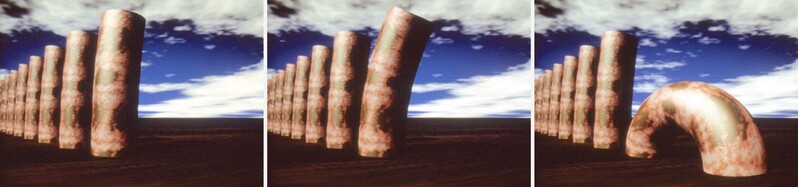
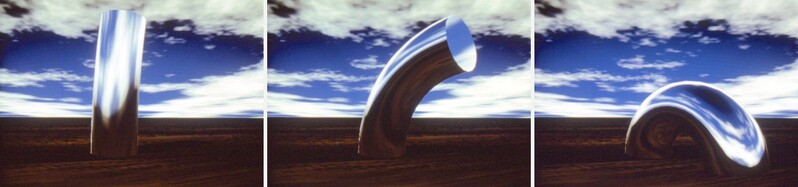
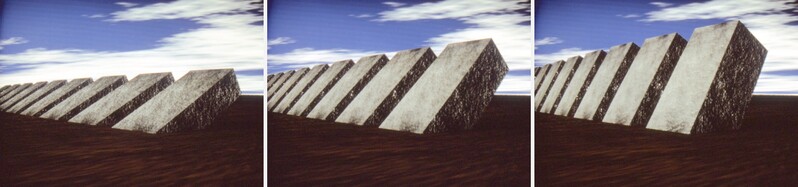
The 12 images below were created in 1985 using a single, 8 bit monochrome fractal pattern combined with flat geometric shapes, and rendered with an experimental displacement shader written by David Gordon.
Limited shading options were overcome by extracting soft-edged "slices" of the grey-scale fractal texture, rendering each slice with different shader parameters, copying the soft-edge values to the alpha channel, and compositing the rendered slices together to create single images.
The 720x486 resolution images were rendered and composited on a VAX 11/780 computer located at the Omnibus New York studios, and photographed from a monitor using a Pentax 35mm still camera.
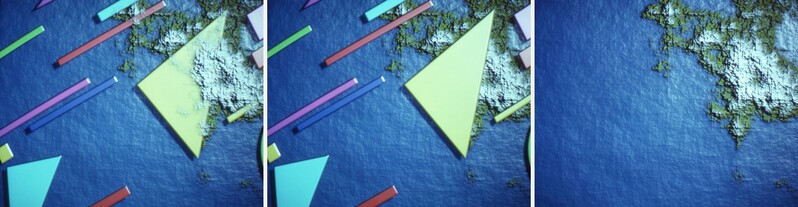
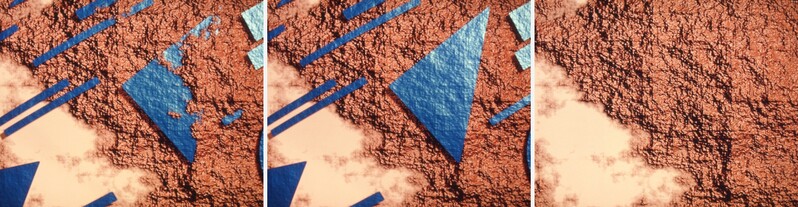
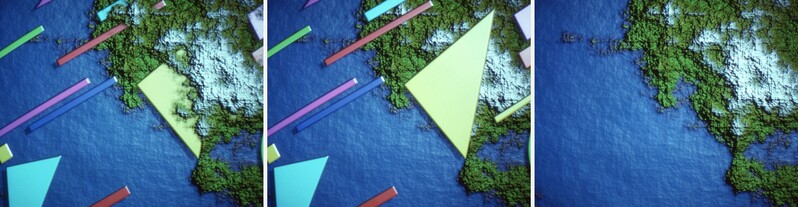
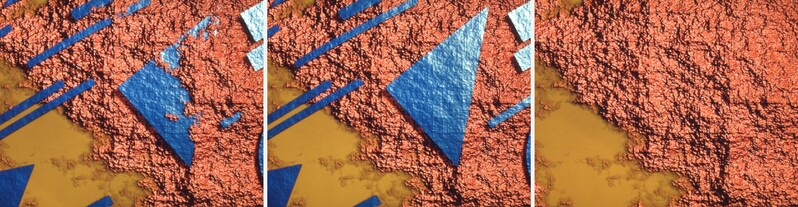
This series of images was later submitted, and accepted, as my entry for the 1986 SIGGRAPH Art Show. However, along with the acceptance notice, the Art Show Committee asked that I select only one or two pieces for the exhibition.
In my youthful arrogance I told them I wanted all 12 images in the show.
I never heard back from the SIGGRAPH Art Show committee and, because of work deadlines, I never followed up.
Sadly, no images from the "Frac Land" series made it into the exhibition.
But, this software and workflow was later used in an animated promo I created for Cinemax.
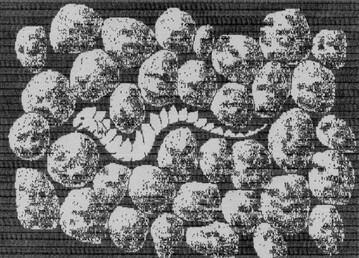
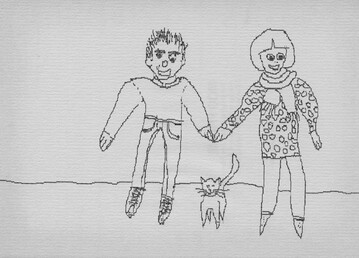
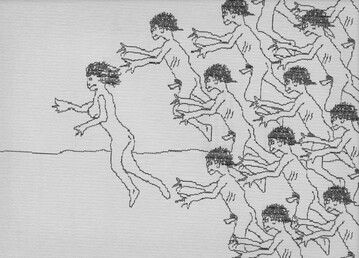
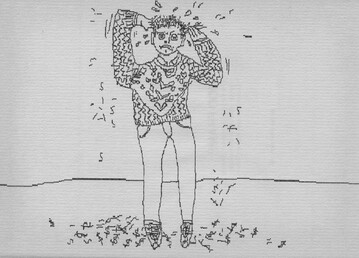
These next four images were created around 1985 using a mouse and paint program that came with the IBM PC. The final output was on grey paper using a dot-matrix printer.
These are not technically "CG" images, but were created using a PC, so, what the heck.
From late 1982 through August of 1983, I was working at Vertigo Computer Imagery in Vancouver. While becoming familiar with their hardware and software, and before starting any commercial projects, I enjoyed creating various personal stills and animations.
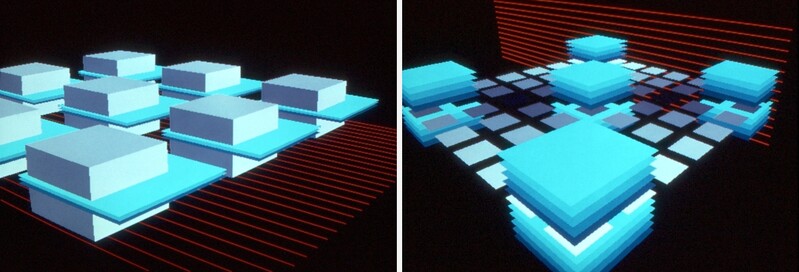
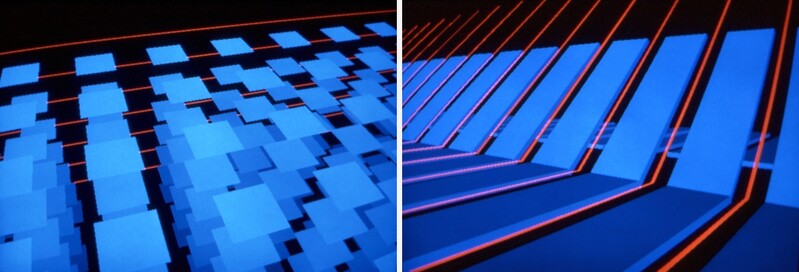
In late 1980, by some great fortune, I came across an announcement for a computer animation course taking place at Simon Fraser University beginning in January of 1981.
The class was called "Art & Computers" and was taught by Jerry Barenholtz.
There were no pre-requisites for acceptance, and the cost was $44.00. There were about 6 other students in the class, which was held on Tuesday evenings from 6 to 8PM.
It changed my life.
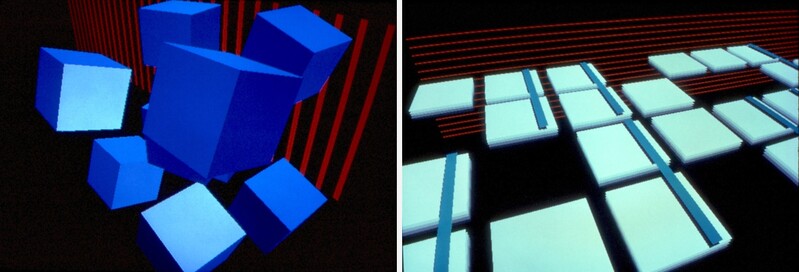
Having practically no experience with computers, I found myself using an Evans and Sutherland Picture Systems II, front-ended by a DEC PDP-11. This system was capable of real-time vector graphics that could be manipulated by a scripting language, (GRAX), or in real time with knobs and buttons.
Jerry was a patient teacher and it didn't take long before I was comfortable with the system and creating various animations.
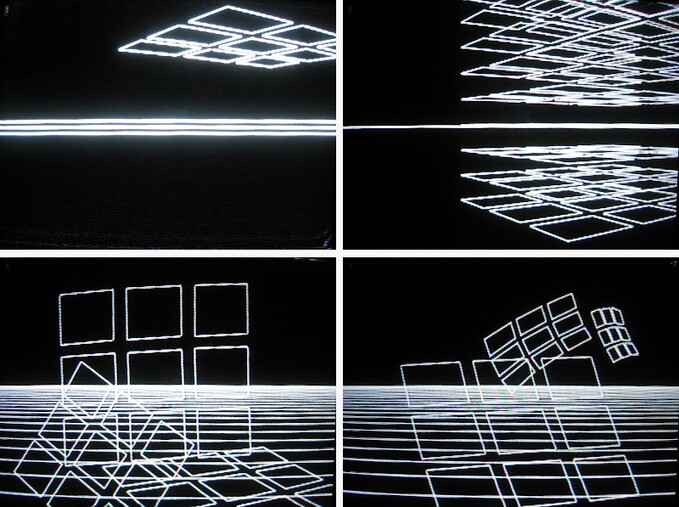
For final output, a 16mm film camera was set-up in front of the high-resolution monitor, and controlled by software to record one frame at a time.
My first computer animations were created on this system, including "Time Lines", a 2 1/2 minute piece featuring an original soundtrack by John S. Gray. Unfortunately, the film has been lost, and all that's left are a few low-resolution stills and this 30 second segment from a 3/4 videotape.
It's a little ironic that my "first computer" was such a high end system, but the experience convinced me to switch over to computer graphics and learn how to program.
However, after the SFU course, I no longer had access to a computer and definitely couldn't afford to buy my own. So, I would hang out at various Vancouver stores that had PC's on display, like, Radio Shack, home electronics shops, and even some department stores.
Once I got on a machine, (after waiting impatiently for young kids to stop fooling around on them), I'd spend as much time as possible, with an instruction book, learning the "BASIC" programming language. Eventually, I'd be asked to leave the store, so I'd just move on to the next one. And, that's how I started learning how to program.